
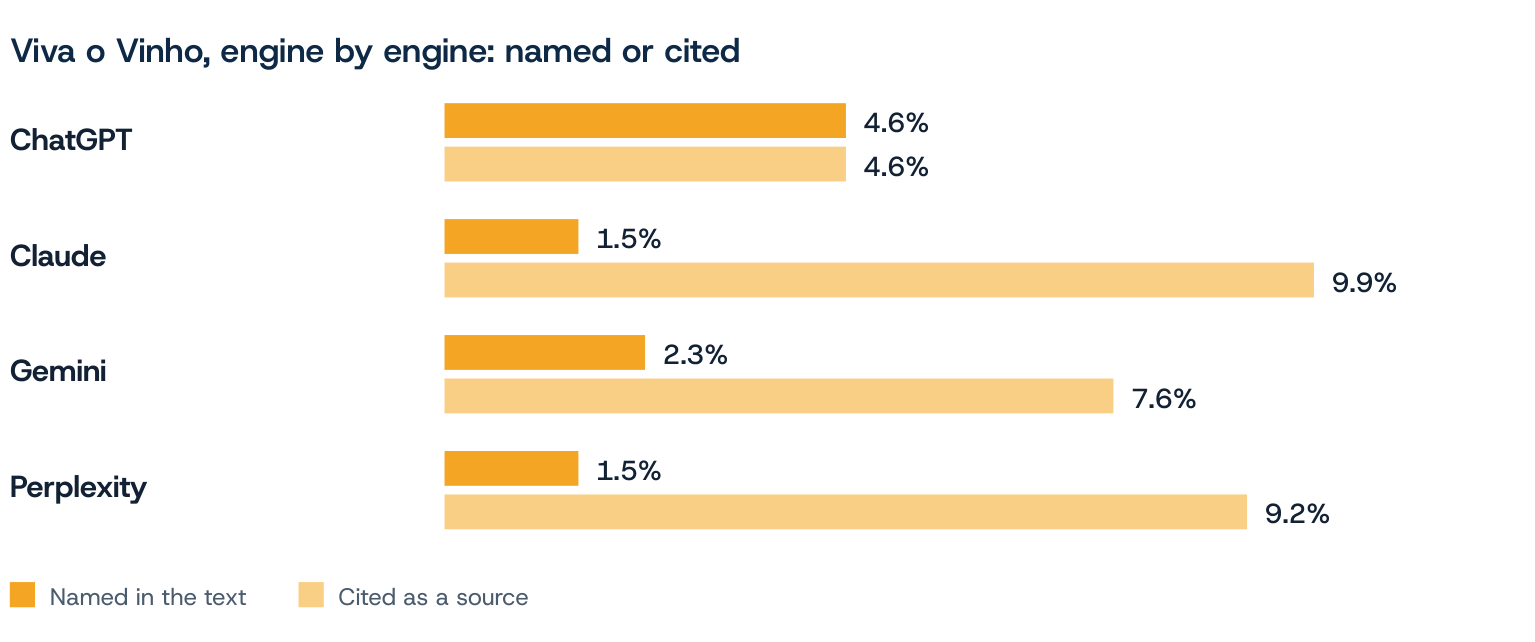
Viva o Vinho runs Portugal’s wine events agenda and reviews wines on value for money. In November 2026 we ran our first full Baseline on it. We asked 131 questions that wine buyers ask in Portuguese to ChatGPT, Claude, Gemini and Perplexity, three times each, and read all 1,572 answers. Viva o Vinho is our own brand, so we can show you what a client receives.
1,572
AI answers read
3×
more often cited as a source than named
109 of 131
questions where the answer can still change
The engines read the site, then leave out its name
126 answers cite vivaovinho.pt as a source. Only 38 write the name Viva o Vinho. Your buyer gets the information and never learns where it came from. Closing that gap is the first job of the plan.
Strong on events, absent elsewhere
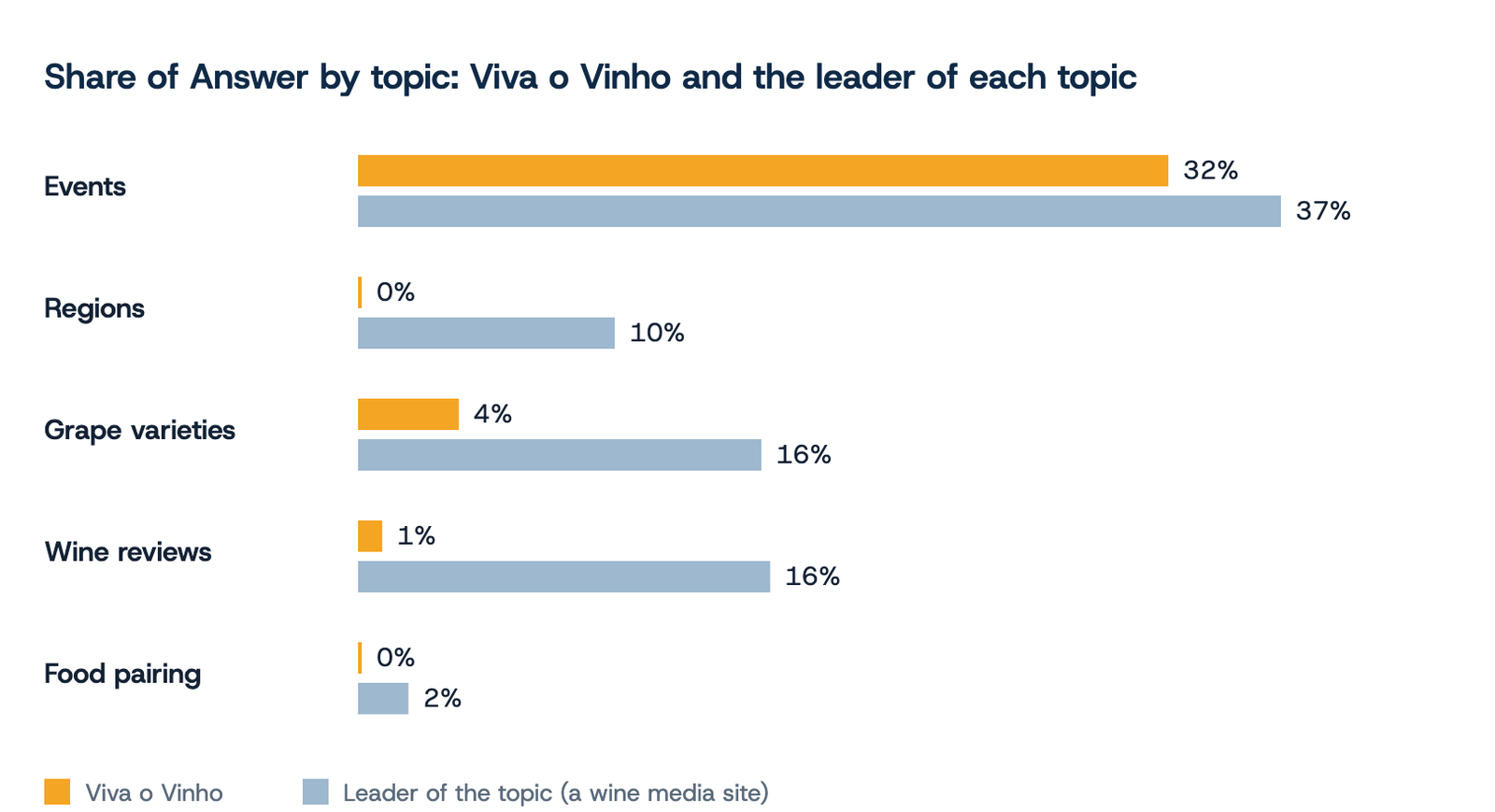
On questions about wine events, Viva o Vinho counts in about a third of the answers, close to the leader. On regions, grapes, food pairing and reviews it counts in fewer than 5 in 100. Four wine media sites take those answers.
The most searched question had no wine site in the answer
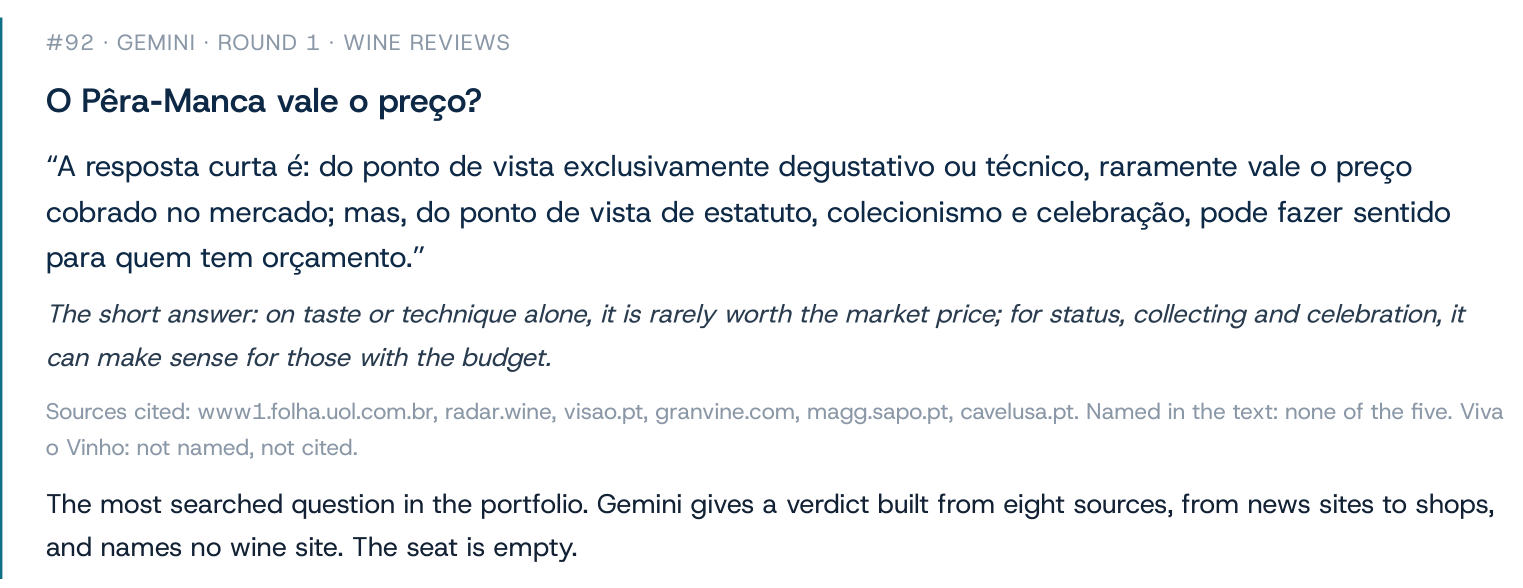
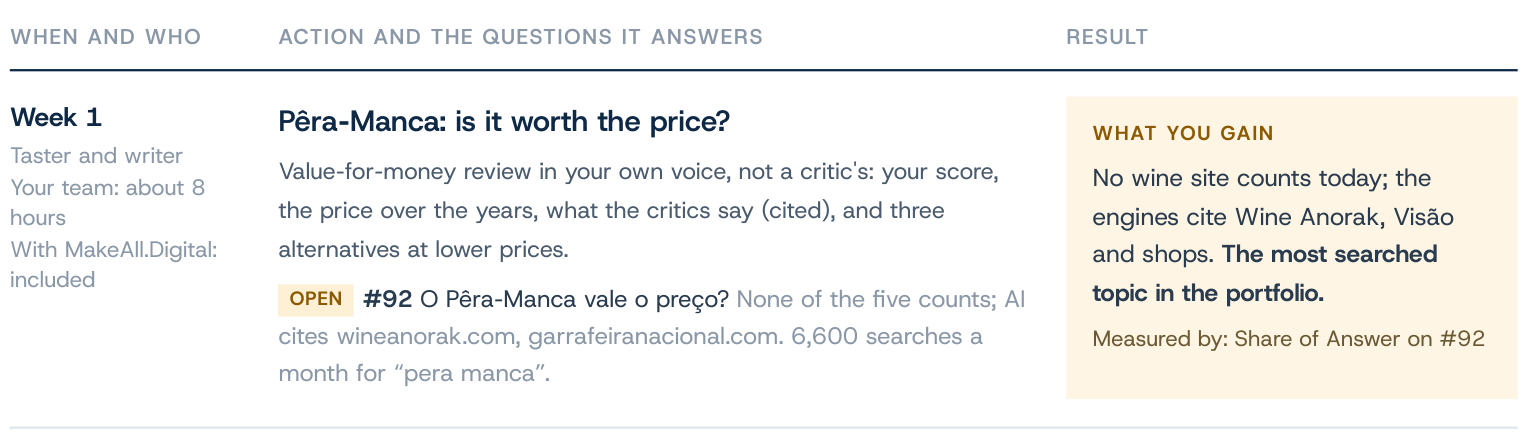
Portugal searches “Pêra-Manca” 6,600 times a month. When we asked Gemini whether Pêra-Manca is worth the price, it built a verdict from eight sources, news sites and shops among them, and named no wine site. The Baseline quotes answers word for word, so you read what your buyers read.
What the winning pages have in common
For the ten open questions with the most demand, we opened the page the engines cite most and read it. The winners use one heading per item: per style, per place, per producer. They show something first-hand, like a tasting of several vintages or a panel of 46 wines. Three of the ten are more than five years old, so a clear structure beats a recent date. The plan copies what wins instead of starting from a template.
The engines got two facts wrong
We also asked ten questions about the brand itself. The engines got the founders, the 2015 launch and the scoring method right. Some answers still mention an online shop that closed about three years ago. Others say Viva o Vinho organises tastings, when it publishes what organisers send. One clear sentence on the About page corrects each claim at the source.
ChatGPT already sends visitors
In Google Analytics, two thirds of the year’s visits from ChatGPT arrived in the last three months. Of the visits with a recorded landing page, nine in ten start on an event page, the topic where the engines already name the site. The traffic and the measurement tell the same story.
The plan: a content calendar with a gain for every action
The Baseline ends in a 6-month plan.
- Month 1 fixes the site, starting with the event data that AI crawlers could not read.
- Months 2 to 6 take one topic each. We ordered them by search demand, distance to the leader, hours of work and the brand’s right to speak, and checked the order against seasonality.
- Every action lists the week, the owner, the hours, the questions it answers, what you gain and how we measure it.
For Viva o Vinho that adds up to 26 new pages answering 46 open questions, 100 Instagram posts, 10 short videos and outreach to the sites the engines already cite. Each target follows one rule: keep the questions you win and win half of the rest by the next measurement. The second measurement starts on 25 February 2027.
What you get with a Baseline
- Your portfolio of buyer questions, with Google demand for each
- Share of Answer for you and up to four competitors, by engine and topic
- Every AI answer, in a data file you can filter
- The source map and Google AI Overviews
- A machine-readability audit of your site
- How AI describes your brand, claim by claim
- A 6-month content plan with owners, hours and targets
- A presentation to your team
- A second measurement at 90 days